


LAS VEGAS -- There were a lot of things Charles Oliveira did not enjoy as a young man, shelter from the elements being chief among them. He grew up in one of Brazil's notoriously poor favelas, without what many in the civilized world would refer to as life's necessities.
There was little protection from the searing heat of summer, or warmth from the biting, cold winds of winter. Clean water to drink wasn't always easy to find, and there wasn't always three meals a day on the table. Crime and drugs were rampant around him and money was always in short supply.
They'd heard a bright and brilliant world existed beyond those dreary ramshackle homes where they lived, but without evidence of it, who could believe it?
Fighters, great ones, generally don't hail from comfortable environments. They grow up fighting for everything they get: A pillow to lay their head, a hot meal, a cool glass of water. Something clicks in them and it turns them into savages, who use the power of their fists to make a better life for themselves.
Charles Oliveira grew up destitute, as poor as one could imagine, luxury nowhere to be found. When his ability to fight, to kick, and punch, and knee and choke, proved to be a way out, it might have stood to reason that he'd never return. Why go back to one of the most forlorn places on Earth? Why see reminders everywhere of the dangers of drugs, of friends lost, of lives shattered, of dreams snuffed if you didn't have to?
Oliveira, who became one of the greatest fighters who ever lived, will face a significant challenge on Saturday on the main card of UFC 300. He'll fight Arman Tsarukyan at T-Mobile Arena for the No. 1 contender's spot in the lightweight division and what he believes to be the next shot at champion Islam Makhachev.
Oliveira lost to Makhachev at UFC 280 on Oct. 22, 2022, when he was submitted with an arm triangle. It was one of the worst performances in his career.
"I wasn't there," he said. "I didn't show up."
Why that is, well, we may never know since Oliveira not only isn't willing to talk about it, he won't talk much about the fight at all. He hasn't watched it and doesn't plan to.
But a win over Tsarukyan will make him the division's No. 1 contender and, theoretically, the next challenger for the title.
He isn't too concerned about that now, though he said unequivocally, "I was told [I would fight for the title if I won] and that is what I believe is going to happen next."
Oliveira will make big money for a rematch with Makhachev, though money is the least of his concerns. In his illustrious UFC career, he's earned 19 post-fight bonuses, earning $970,000 in additional pay in addition to his fight purses and pay-per-view shares.
But he returns to his roots in Brazil often as a way to remind himself of what he overcame as well as to serve as an inspiration for those who still live in those impoverished conditions. Seeing him in the flesh is a tangible reminder to them that not only is there an incredible and vibrant world beyond their walls, but that it is possible for them to make it, too.
He's met many people who have made it out, both fighters and in other areas, and they've served as an inspiration to him to keep pushing.
"I see these people refuse to give up and continue to work and chase their dreams and it can't help but [inspire me]," he said.
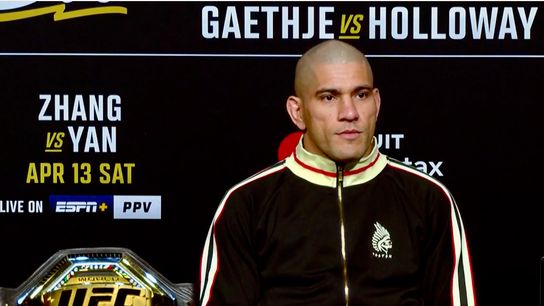
His countryman, light heavyweight champion, Alex Pereira, fights Jamahal Hill in the main event. Pereira, too, grew up abjectly poor, with little to his name.
He was on a bad path, getting in trouble and looking as if he would become little more than a statistic, when he found fighting. He first became one of the greatest kickboxers in history but later became one of the greatest MMA fighters in the world.
He escaped the favelas, but a part of them still lives inside of him.
"You know, I was very poor when I was a kid," he said. "[We had] nothing. Fighting [to make a living] is difficult but the life I had prepared me for that. You had to work hard just to survive and I did. And now I'm here. But I can't forget where I came from. That's what made me who I am today."
Kevin Iole
UFC light heavyweight champion Alex Pereira overcame a life in the favelas to be one of the elite fighters in the world.