

The glee is evident in Song Yadong’s voice as he discusses his bout on Saturday with Henry Cejudo.
It’s a big deal for the Chinese native who, by the way, sold programs at the 2008 Olympics in Beijing on that rainy August day when a 21-year-old Cejudo won a gold medal in freestyle wrestling.
“He’s one of the greatest,” Yadong said. He was beaming holding programs as a 10-year-old; a smile creases his face as he muses about the chance to take a shot or two in the chops from this legend of his sport.
It’s as if a win over the now 38-year-old Cejudo at UFC Seattle will transfer some of those epic credentials onto him.
Excuse Cejudo if he’s not equally as excited to see Yadong across from him. Cejudo stands just 5 feet 4, but if one painted a mural of his accomplishments on the wall — Olympic gold medal winner, youngest American wrestling gold medalist, UFC flyweight champion, UFC bantamweight champion, three Pan-Am Games wrestling golds, two U.S. wrestling golds, etc. — the list would extend above even Victor Wembanyama.
He finished the great Dominick Cruz on May 9, 2020, and walked away since it all seemed so beneath him.
In 21 months from 2018 to 2020, Cejudo beat Demetrious Johnson, T.J. Dillashaw, Marlon Moraes and Dominick Cruz.
Let that sink in on you. Even now, almost seven years later, Johnson remains one of the great fighters in the history of the sport. Dillashaw was a top-five pound-for-pound fighter when Cejudo wasted him in just 32 seconds in Brooklyn.
There’s a small army of folks who will go to their graves insisting Cruz is the best bantamweight in MMA history.
It’s as if Cejudo blitzed an entire wing of the UFC Hall of Fame in less than two years.
Understand now how it’s hard for him to get his motivation up for Yadong, a guy who is coming off a loss and is 2-2 in his last four.
It’s a promotional tactic as old as two men accepted money to fight each other: Build your new star off the accomplishments of your old one.
That Cejudo walked away after dispatching Cruz? Certainly not front page news.
He grew up in poverty in Phoenix, and didn’t have his own bed until he moved to the Olympic training center and one was supplied for him.
The air conditioning in his family’s home was not reliable, and would go down in the summer more than every now and then.
A cynic would say it’s where he first learned to cut weight.
His ability to beat people up led him to be richer than he could ever have imagined, so walking away made sense at the time.
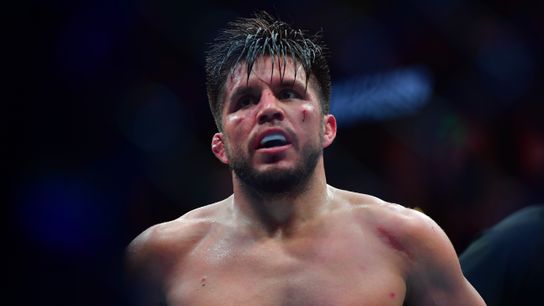
Gary A. Vasquez/Imagn Images
Henry Cejudo is an underdog to Song Yadong on Saturday.
It was also a bit of a power play. He wanted the UFC to plead with him to come back, to have Dana White to offer to sweeten the pot.
That gambit didn’t work, and Cejudo learned that if you say the word retirement where the notoriously hard-of-hearing White hears it, you’d better be prepared to walk.
“This sport is different, man,” White said a few years ago, and repeated often in various forms over the years. “If you even think about retiring, then you should do it because this isn’t the place for you if you’re not all in [on fighting].”
He became a father in retirement, but you don’t get the resume he owns by being content changing diapers when there was always another goal to chase.
Cejudo saw Aljamain Sterling as a vulnerable champion, and believed he could take him. As so many do, he came back.
He didn’t do it for a couple of paychecks or to finance a new deck out back.
No, he’s the kind of competitor who, when he was Double C aspired to be Triple C. And when he became Triple C, what was next? Of course, 4 C.
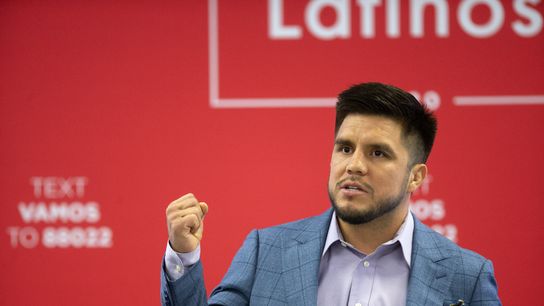
David Wallace/Imagn Images
Former champion Henry Cejudo returns to the UFC to face Song Yadong at UFC Seattle on Saturday.
“My original plan was to win the title [by beating Sterling], beat him, to defend it against [Sean O’Malley] and then go up and challenge [then-featherweight champion Alex] Volkanovski,” he said. “That was my original plan.”
He lost to Sterling, which ended that dream, and then was beaten at UFC 298 by Merab Dvalishvili, the current champion.
Back-to-back losses are a humbling moment, particularly for a guy whose losses were as infrequent as the Pittsburgh Pirates in the playoffs.
He stuck around and rehabbed an injury because, well, when you’re Triple C, you don’t leave the sport being carried like a sack of potatoes as Dvalishvili did to him.
It’s not how guys at that level of athletics are wired. They’re insane competitors and losing burns more than winning soothes.
“Now, I just feel I’m motivated more by getting into the win column,” he said. “It’s getting a win under my belt and continuing to trudge forward.”
Still, though: Yadong? Really?
That’s no insult to Yadong. He’s clearly a talent and could wind up as a champion one day. He’s only 27.
But the biggest name on his resume is Chito Vera.
Even if his skills are diminished a bit — and Cejudo says they’re not — how does he motivate himself to push through to fight a guy who is seemingly not on his level?
“When the light shines bright, how will he show up?” Cejudo asked. “I’ve been there before. The adrenaline? Man, honestly, I don’t even see a crowd when I fight. I just love winning more than anything.”
It’s that fire, that chip on the shoulder, that need to always prove a point that elevates the great ones. Losing stings and winning is a drug the likes of which no man could ever manufacture.
Standing in that cage after a fight, hearing Bruce Buffer bellow his name and the crowd going bonkers is why Cejudo puts himself through months of torture in camp.
Winning is a drug the likes of which no man could manufacture. Cejudo has spent his life chasing it, one title at a time.
Song Yadong still talks about Cejudo like he’s larger than life, the legend who stood atop the Olympic podium while he sold programs at the front door. But for Cejudo, that moment was a lifetime ago. The only name that matters now is the next one.